Giving the world a visual language
A world takes shape through its people, its places and the way players read it. This collection brings together seven visual studies shared for the TAIIAT journal: character proportions, equipment, an isometric village courtyard and two interface explorations.
These images are concept artwork and visual studies, not gameplay captures. They communicate an artistic direction. They do not show completed game features or establish the final appearance of the game.
Characters before categories
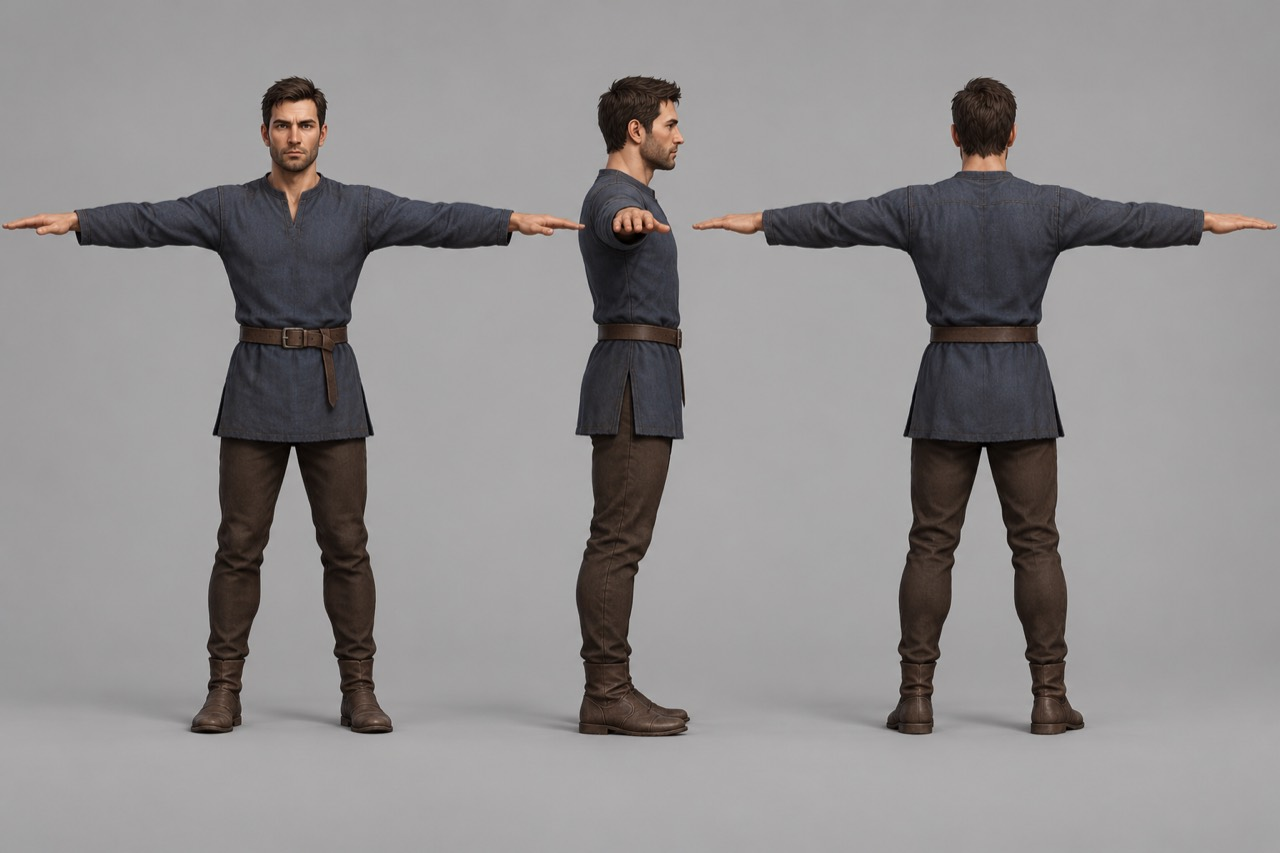
The character turnaround begins with a simple foundation: a blue-grey tunic, a leather belt, dark trousers and boots. Front, side and rear views keep the proportions and silhouette easy to read.
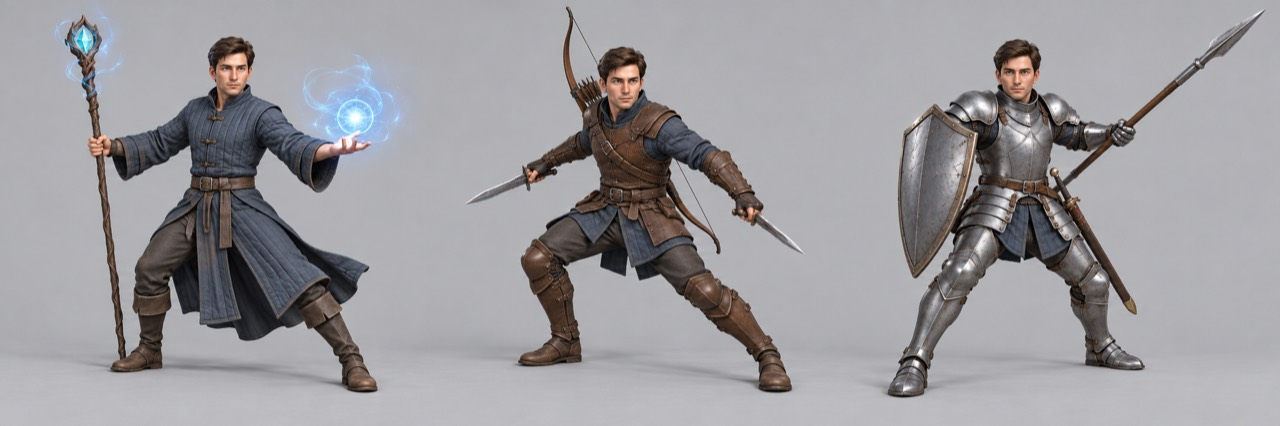
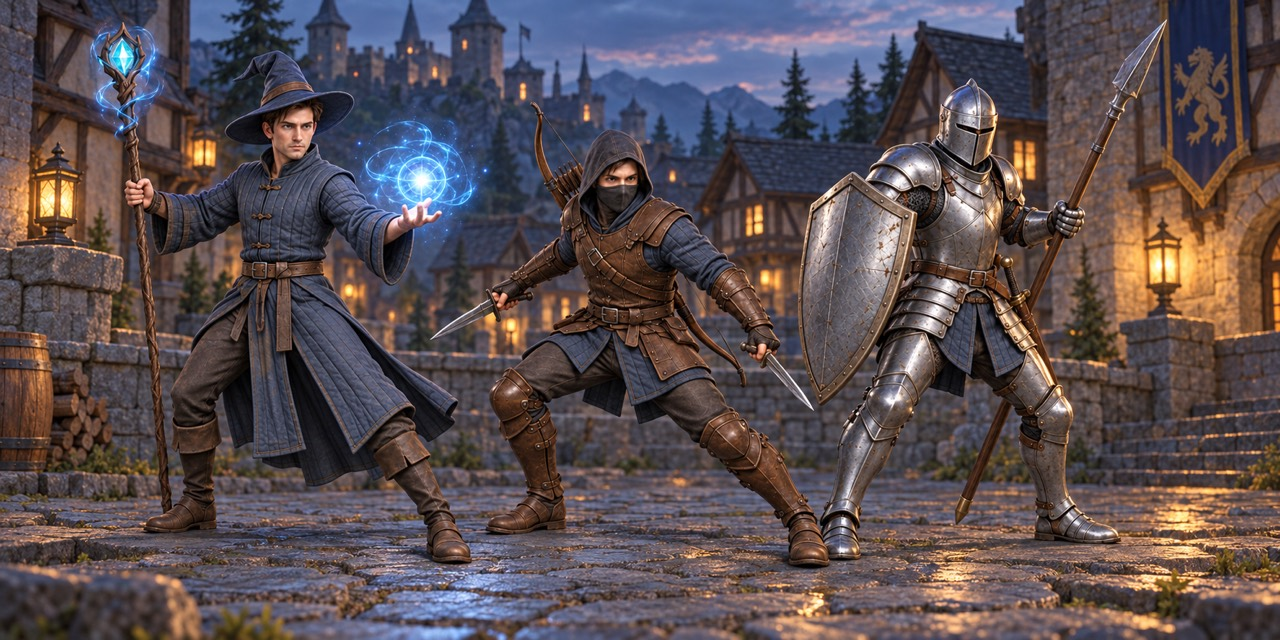
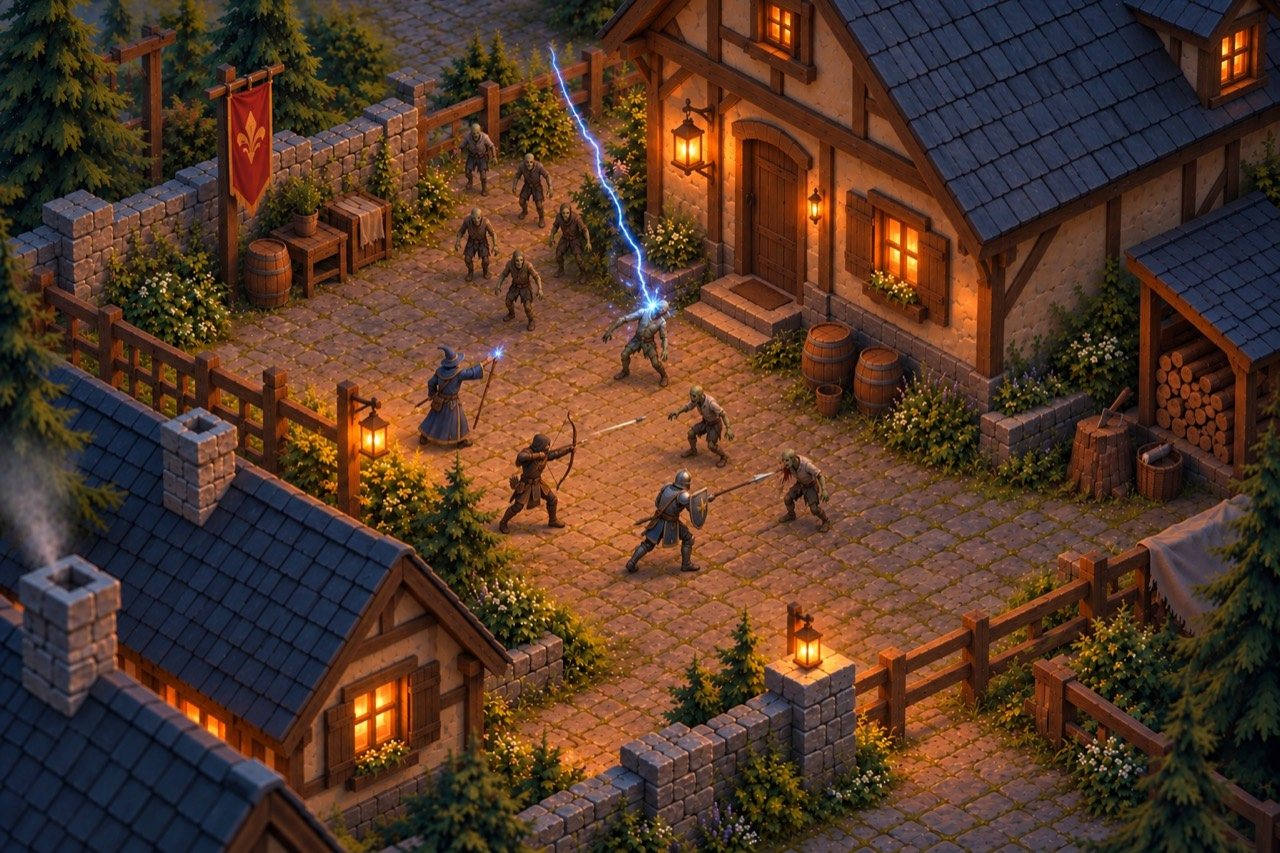
The equipment studies explore how cloth, leather, metal, weapons and headwear change that same figure. A staff, a bow, paired blades, a shield and a spear create distinct silhouettes. The town scene then places those equipment ideas beside one another in a shared environment.
These are visual explorations of equipment and identity. They do not define a fixed class selection or restrict how a player may develop a character.
A place worth returning to
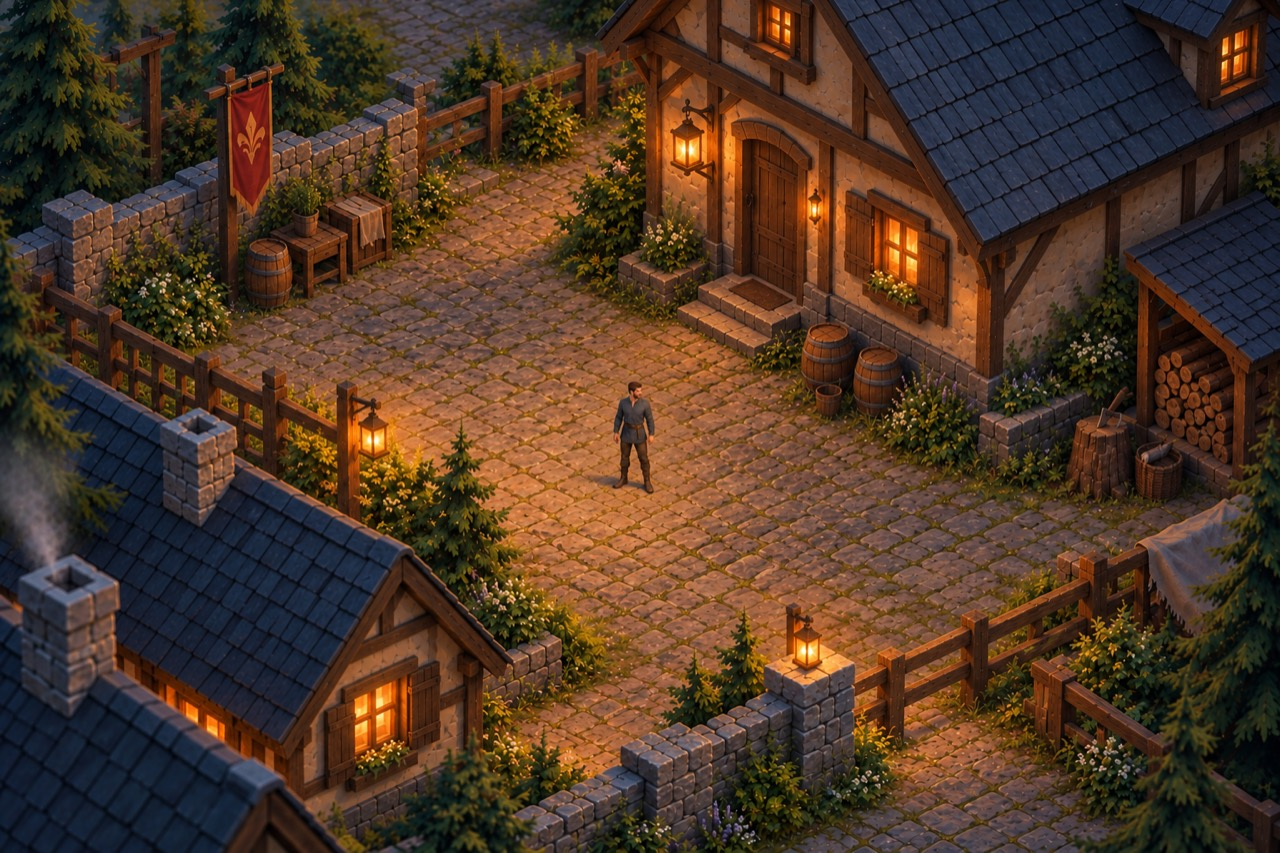
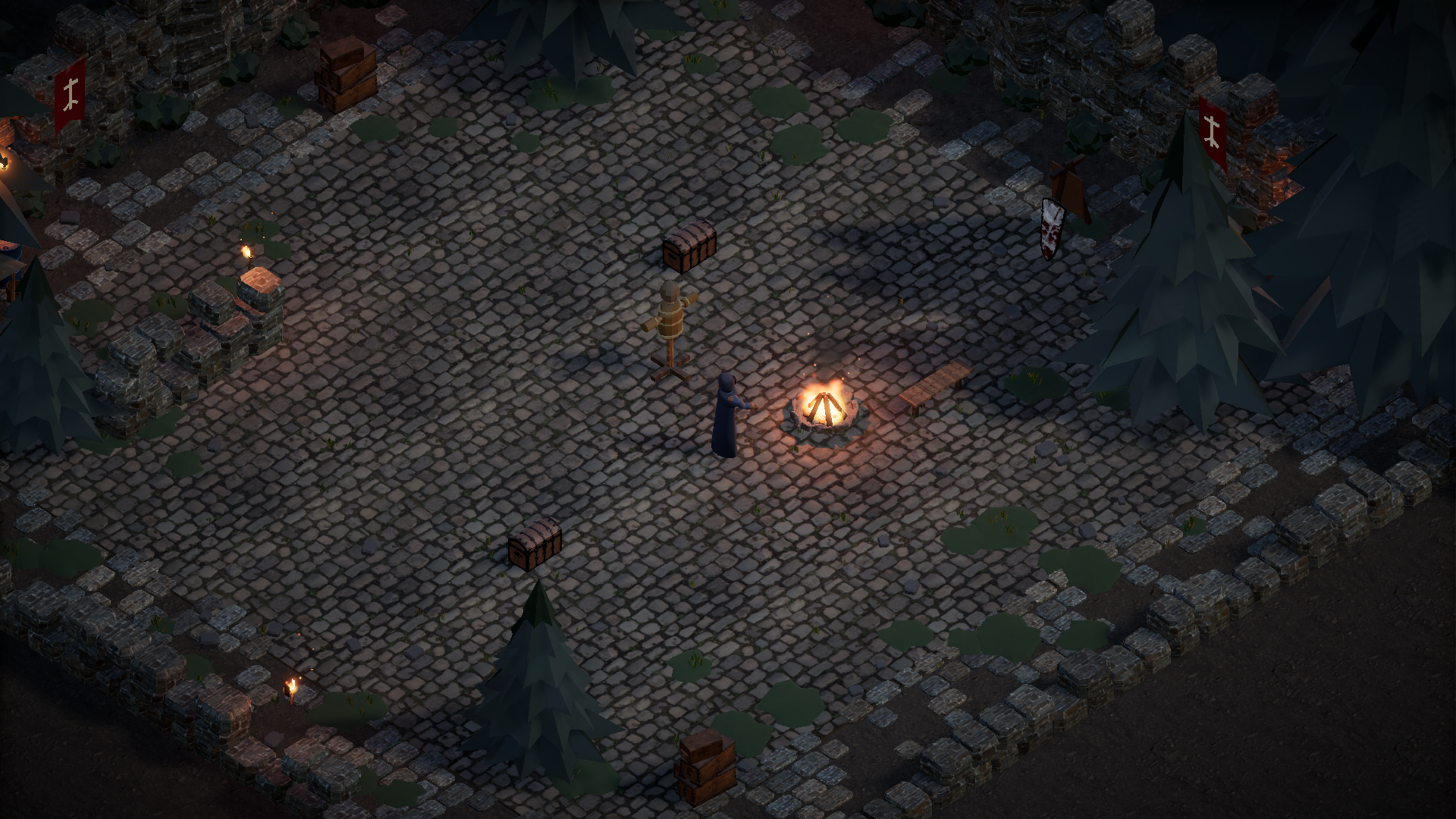
The courtyard studies bring the camera above the village. Stone paving and walls give the scene structure; timber houses, dark roofs and vegetation soften its edges. Warm windows and lanterns make inhabited spaces stand out against the cooler stone and surrounding greenery.
A second illustration explores an encounter in that same setting, using character placement and a bright magical effect to make the action legible. It is a composition study, not evidence of implemented combat, enemy behavior or multiplayer.
Reading the systems
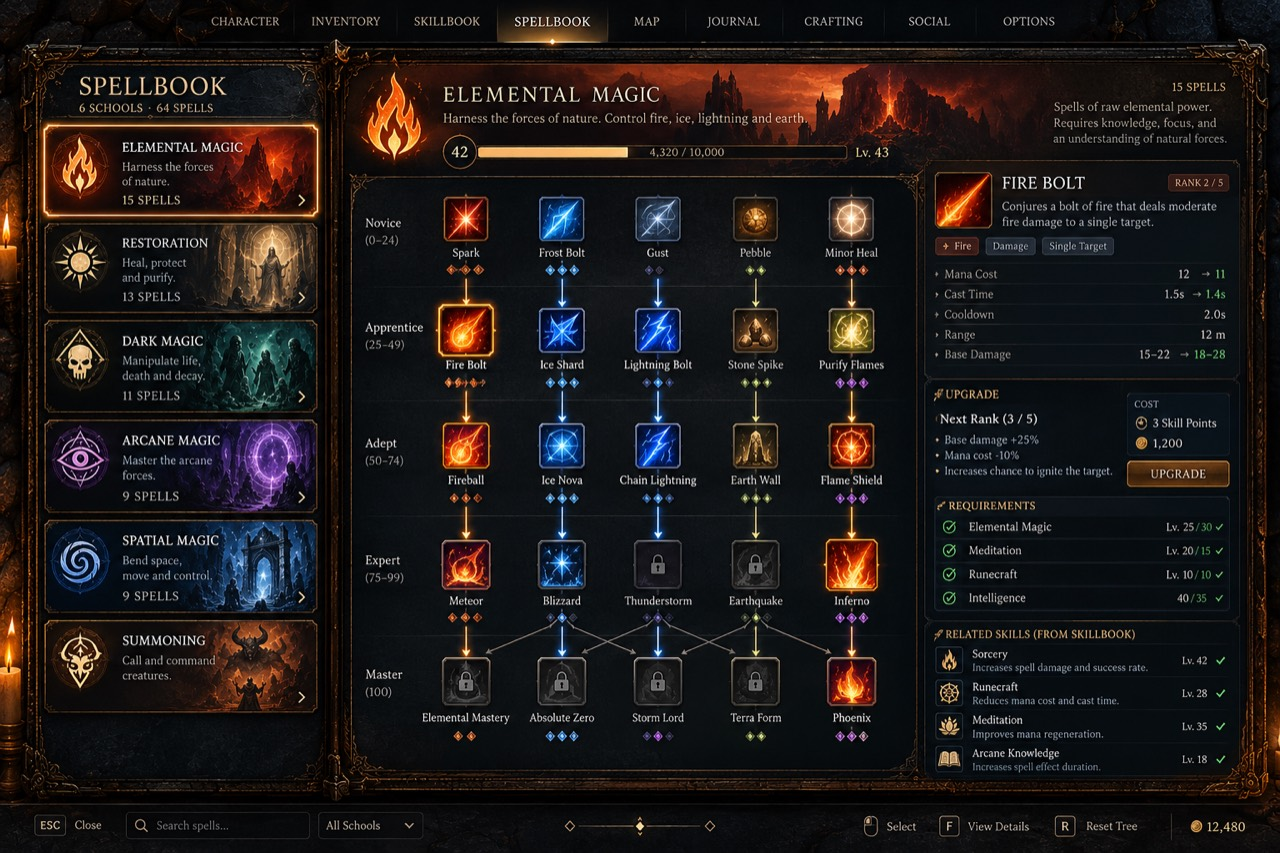
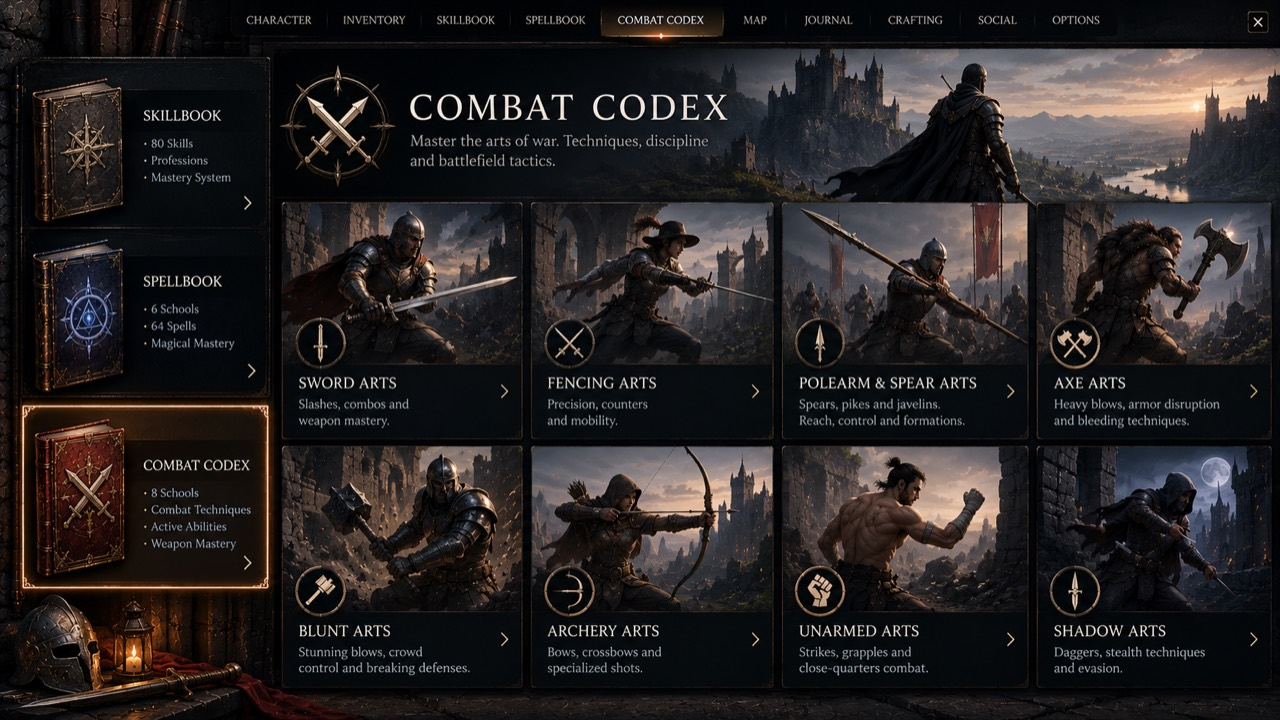
The Spellbook study explores a hierarchy of schools, spell icons, connections and a focused detail panel. The Combat Codex study explores another way to browse combat disciplines through large, recognizable illustrated entries.
Both are interface concepts. The names, counts, levels, costs, values and unlock paths visible inside these images are illustrative. They are not confirmed rules, balance values or a promise of the finished feature set.
From direction to development
The aim is a coherent visual language: grounded proportions, readable equipment, clear isometric spaces and interfaces that make complex choices understandable.
Turning that direction into working art and interfaces remains development work. Actual prototype captures are presented separately in the development gallery, with their own dates and work-in-progress labels.

The TAIIAT team
A world in the making.